Looking back to move forward
Retrospective valuations have become an increasingly important part of Acumentis’ Family Law work across Australia. As matters become more complex and timeframes stretch further back, there is a growing need to accurately determine what a property was worth at a specific point in the past, not just what it’s worth today.
While the objective may sound simple, establishing a defensible historical value often requires careful analysis, experience, and a deep understanding of market movements over time.
What is a Retrospective Valuation?
A retrospective valuation determines the value of a property as at a historical date. In Family Law matters, this is commonly required to establish the property’s value at the commencement of a relationship, as well as to support asset division where transactions, separations, or other key events occurred months, or even years earlier.
For single-use residential properties, valuers typically apply the Direct Comparison Approach, which involves using sales of comparable properties and comparing those sales against the attributes of the subject property to establish a value as at a point in time.
Finding Comparable Sales – Easier Said Than Done
The main goal of establishing a value of a property is to find sales of comparable properties that occurred in and around the time of the valuation date. In a current market, that’s usually straightforward.
However, when we’re valuing at an historical date, locating these sales can be a lot more difficult, particularly in slower, low-turnover or declining markets. In these cases, when sales are limited, we must:
- Broaden our search parameters to include older sales, or
- Consider sales that occurred after the valuation date, which can still provide valuable guidance when interpreted in context.
Each of these requires careful judgement to ensure the evidence remains relevant and defensible.
Understanding Market Movement
The difficulty with using sales removed from the assessment date lies in accurately determining how the market moved between the sale date and the valuation date. This adjustment process is a routine part of valuing property in dynamic markets today. But it becomes far more challenging when looking back two or three decades, particularly when assessing behaviour in the early 2000’s or late 1990’s, which I have had to do.
Those periods lacked today’s depth of digital data, making experience and historical insight especially important.
Blending Data and Valuation Judgement
Having practised as a valuer through much of this period, I’ve seen firsthand how property markets have shifted through cycles of growth, stagnation, and decline. Recently, I came across a historical market movement table that I still find incredibly useful when providing high-level context around past market behaviour.
While no single data point tells the whole story, tools like this help frame market conditions at a point in time and support a well-reasoned, evidence-based valuation outcome.
Calendar Year Change in National Home Value Index
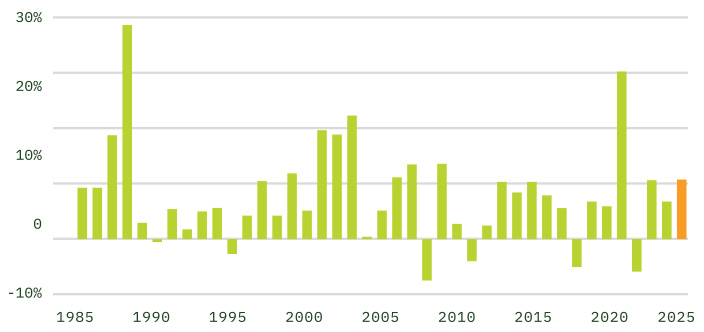
Source: Cotality
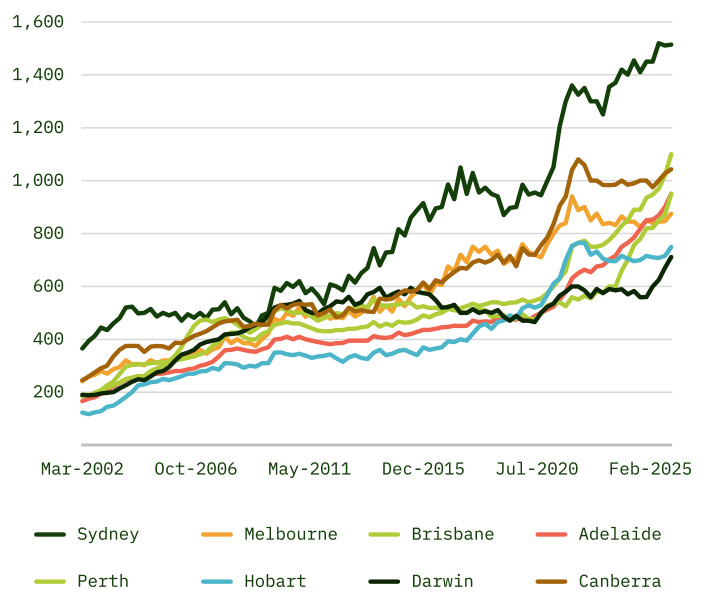
Median price ($) (current) of residential property transfers, Established housing, Capital city, 2002 Q4 to 2025 Q4