The past five years have delivered unprecedented volatility in construction costs, materials and labour availability. This has driven growing uncertainty into lending, development and purchasing decisions across the market.
Key areas of note:
Construction Escalation
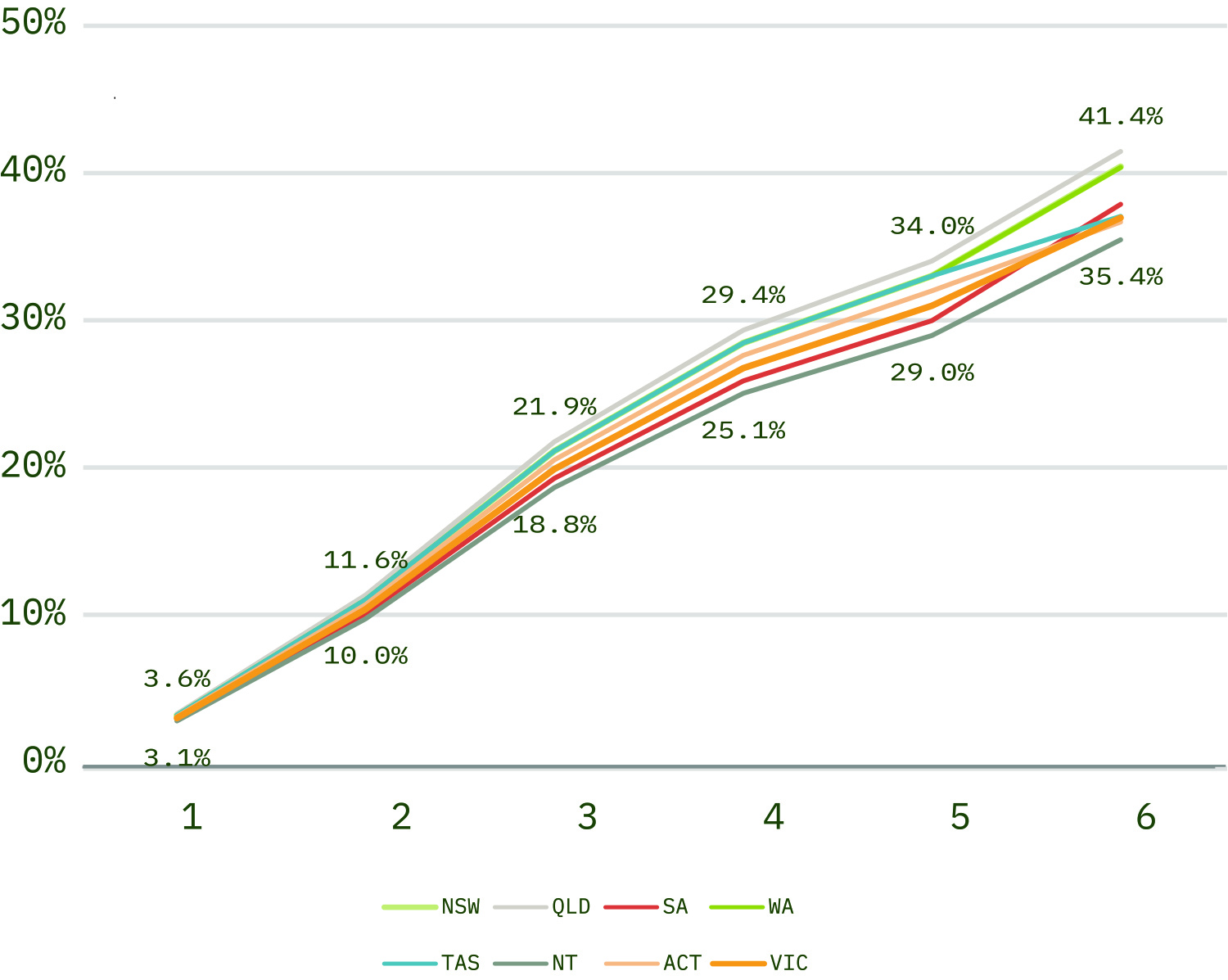
Escalation has been broad-based nationally, with most capital city markets now materially above 2020 levels. Queensland, Western Australia and New South Wales sit at the upper end of the indexation range.
State Construction Cost Increase
Development Type
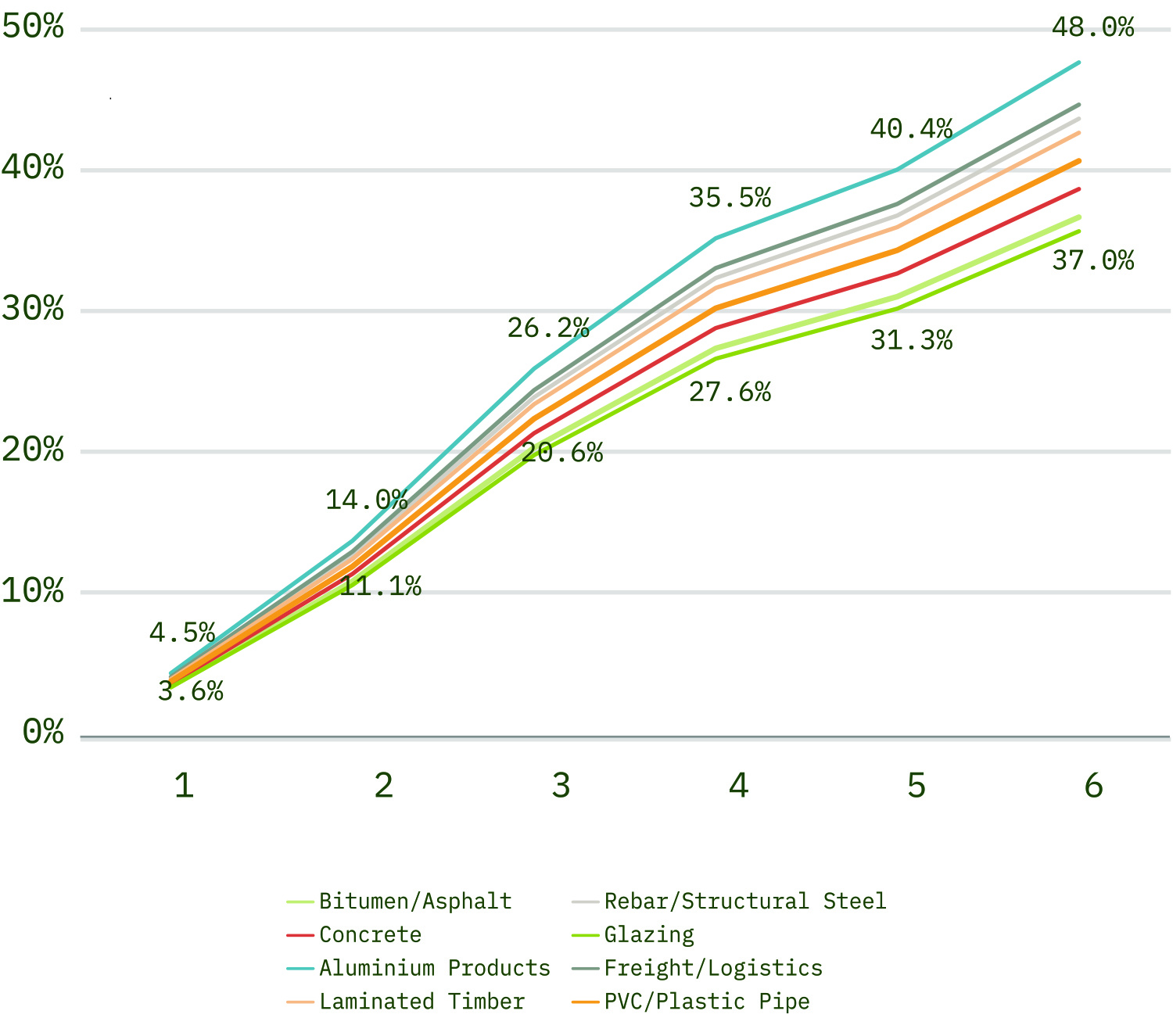
Cost pressure is strongest in projects with higher services, compliance, façade, labour and delivery-risk content. Health, aged care, education and social/affordable apartment projects show the greatest cumulative escalation, while detached housing and industrial assets remain elevated but comparatively lower.
Development Type Construction Cost Increase
Material and Input Movements
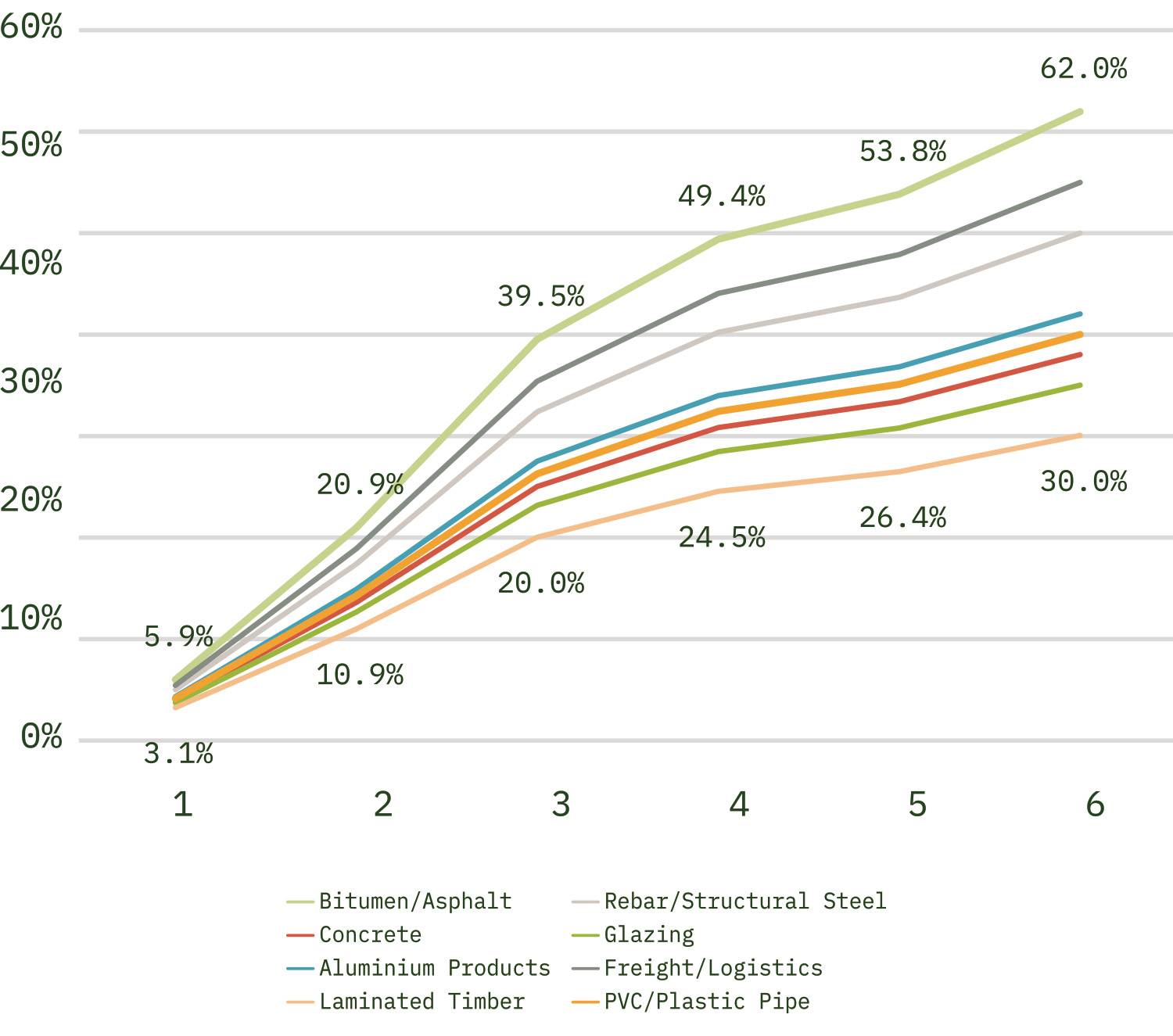
These movements underpin the broader cost reset. Bitumen and asphalt, freight and logistics, steel-related inputs and aluminium products are among the highest-pressure categories. Concrete, glazing, PVC and timber products continue to support a higher replacement cost base across most building types.
Key Material/Input Cost Increase
In a market where cost certainty is harder to achieve, current QS measurement and monitoring is now essential for cost planning, replacement cost reviews and funding assumptions — rather than reliance on pre-COVID benchmarks. It helps:
- Financiers lend with confidence
- Developers deliver with greater certainty
- Property owners make better-informed decisions
Across Australia, developers, financiers and investors continue to navigate a construction environment shaped by labour shortages, contractor insolvencies, procurement challenges and ongoing cost escalation. Recent geopolitical tensions and supply chain disruptions have added further uncertainty to material availability, freight costs and project delivery timeframes. With pricing pressure still present in many markets, rigorous cost planning and project monitoring are critical to protecting funding decisions and maintaining project control.
So what does an Independent QS Control achieve across the Construction Lifecycle?
| Before funds are committed Acumentis Financier QS Reports independently assess project budgets, construction programs, documentation, contingency allowances and key delivery risks. A comprehensive review is undertaken for
To identify potential shortfalls before funds are committed. |
During construction Progress Claim Assessments independently
|
For lenders and financiers Acumentis acts as an independent risk control throughout the construction lifecycle. Our Quantity Surveyors
|
The result - greater transparency, stronger governance and increased confidence in construction lending decisions.
As they say “what’s not measurable, is not manageable” as construction costs remain uncertain, Independent QS control and measurement is becoming critical. By measuring the risk, monitoring the risk and managing construction risk, the team at Acumentis is assisting clients remove uncertainty from the lending process, protect capital, strengthen lending governance and support better project outcomes through every stage of construction.
Strengthened QS Capability Nationally
To meet the growing demands in this area, Acumentis has strengthened its national Quantity Surveying capability with the addition of two more experienced professionals under the leadership of Nathan King – National Director Advisory and Grant Roberts – Head of Quantity Surveying Services.

Sujeewa Walpola
MAIQS, CQS
Sujeewa brings more than 14 years of quantity surveying and cost management experience across residential, commercial, government and infrastructure projects. Her background includes cost planning, tender evaluation, contract administration, financier reporting, progress claim assessments, cashflow forecasting and construction risk management.

Neddie Westaway
AIQS
Neddie adds extensive experience in lender reporting, insurance assessments, strata advisory services and construction progress monitoring. Her expertise in financier reporting, capital works fund forecasting and reinstatement cost assessments further strengthens Acumentis' practical, independent advice to lenders, developers and property owners.